
Categories
Helpful TipsPublished January 26, 2026
Solar Panels in California: Paid vs. Unpaid

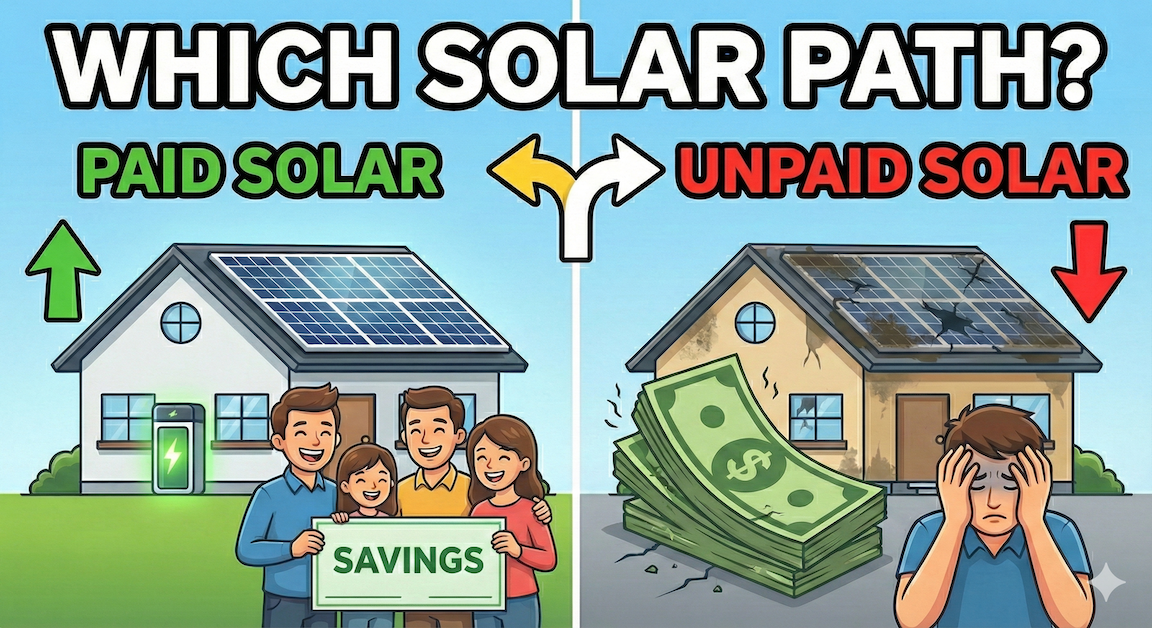
Solar Panels in California: Paid vs. Unpaid — What Buyers NEED to Know
Solar panels are increasingly common on California homes. With rising energy costs, solar can be a major benefit — but not all solar panels are created equal.
For California homebuyers, understanding the difference between paid-off (owned) solar and unpaid solar can prevent costly surprises during escrow and after closing.
Below, we break down what buyers need to know before moving forward on a home with solar panels in California.
Why Solar Ownership Matters in California
California leads the nation in residential solar installations. Because of state energy policies, high utility rates, and building requirements, solar is no longer rare — it’s expected.
However, ownership structure matters more than the panels themselves. The financial and legal implications vary significantly depending on how the system was installed and financed.
The Two Types of Solar Panels Buyers Will See
When buying a home in California with solar panels, the system usually falls into one of two categories:
1. Paid-Off (Owned) Solar Panels
These panels are owned outright by the homeowner. There are:
- No solar loans
- No leases
- No monthly solar payments
2. Unpaid Solar Panels
Unpaid solar typically includes:
- A solar loan
- A solar lease
- A Power Purchase Agreement (PPA)
Each of these has very different implications for buyers.
Paid-Off Solar Panels: Usually a Big Win for Buyers
In California, paid-off solar panels are generally considered a positive feature.
Benefits of Paid-Off Solar
- Lower monthly electric bills
- No additional debt or contracts
- Cleaner transfer during escrow
- Fewer lender issues
- Greater buyer appeal at resale
In many cases, owned solar panels are treated like a permanent home upgrade — similar to a remodeled kitchen or a newer roof.
Unpaid Solar Panels: Where Buyers Need to Be Careful
Unpaid solar is where problems most often arise for California buyers.
Solar Loans
If the seller financed the solar system, there may be a remaining balance. That balance must be:
- Paid off by the seller or
- Assumed by the buyer
Solar loans can:
- Affect debt-to-income ratios
- Impact loan approval
- Reduce purchasing power
Solar Leases & Power Purchase Agreements (PPAs)
Leases and PPAs are very common in California and often run 20 to 25 years.
With these agreements:
- The buyer does not own the panels
- Monthly payments may increase over time
- The contract must be approved for transfer
Some buyers are comfortable with leases. Others are not — and some lenders will not approve certain solar agreements at all.
How Solar Affects Financing in California
This is one of the most overlooked issues in California real estate transactions.
Some lenders:
- Treat solar payments as additional debt
- Require extra underwriting documentation
- Delay escrow due to contract reviews
- Decline loans altogether for certain PPAs or leases
Solar-related financing issues are a common cause of delays and renegotiations in California escrows.
Does Solar Increase Home Value in California?
This is a critical question — and the answer depends on ownership.
Paid-Off Solar
- May increase value
- Can improve buyer demand
- Makes the home more competitive
Unpaid Solar
- Does not automatically add value
- May reduce the buyer pool
- Often becomes a negotiation issue
- May require seller concessions or payoff
In California, solar adds value only when the terms make sense for the buyer.
Net Energy Metering (NEM): A California-Specific Factor
California’s Net Energy Metering (NEM) rules determine how homeowners are credited for excess solar energy sent back to the grid.
Different systems may fall under different NEM versions, which can affect:
- Long-term savings
- Monthly utility costs
- System expansion or modification
Buyers should review not just the panels — but the utility agreement tied to them.
Questions Every California Buyer Should Ask About Solar
Before removing contingencies or moving forward, buyers should ask:
- Are the solar panels owned, financed, or leased?
- Is there a remaining balance?
- What are the monthly payments and escalation clauses?
- Can the agreement be transferred and approved?
- Will my lender accept this solar setup?
If clear answers aren’t available, it’s time to pause and investigate further.
Final Thoughts: Solar Can Be a Benefit — or a Burden
In California, solar panels are common — but not all solar is buyer-friendly.
- Paid-off solar is usually a win
- Unpaid solar requires careful review
The biggest mistakes happen when buyers assume solar automatically adds value without understanding the terms.
Need Help Reviewing a Solar Home in California?
If you’re buying or selling a home with solar panels and want help reviewing the details, reach out to The Halstead Team.
Understanding solar before you’re deep into escrow can save time, stress, and money.

Brian Halstead
| The Halstead Team | HOMWRX | PLACE
or another way